How to Choose Professional Web Templates for Your Industry
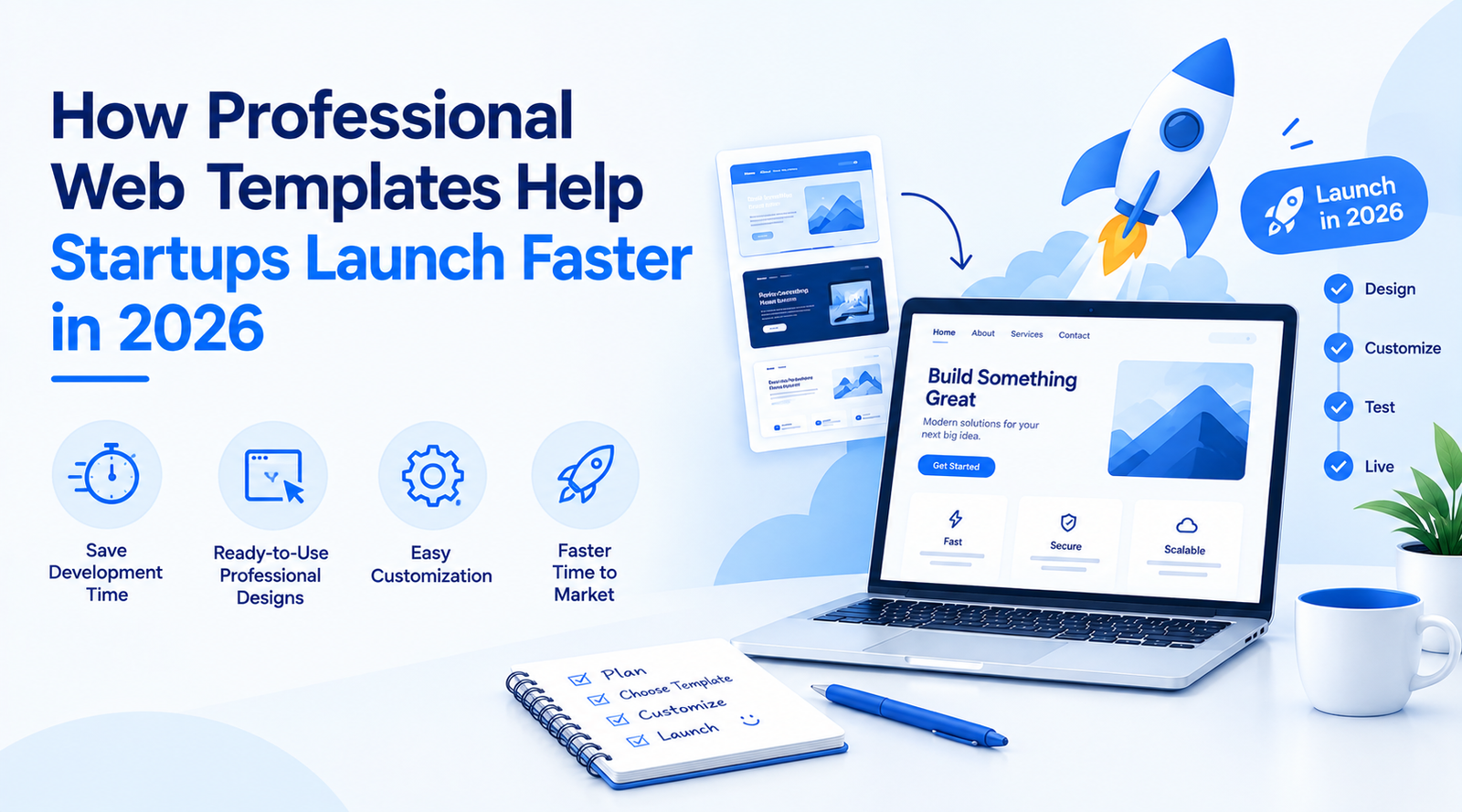
A founder turns an idea into a working website in a single afternoon now, and that speed is reshaping who reaches customers first in 2026. The old timeline, months of custom development before a business ever opens its doors, simply does not fit anymore. That shift has pushed professional web templates for businesses into the center of early planning, giving new companies a working online presence within days instead of weeks. A ready structure frees founders to focus on customers, not code.
Healthcare startups carry an extra layer of pressure. Patients want a clean, trustworthy website before they book a first appointment. A confusing or outdated interface sends them straight to the next clinic on the list. Doctor website templates handle these issues by including appointment forms, service pages, and patient information sections from the start. A new clinic can be up and running in days, and patients start trusting it before anyone on staff ever hires a designer.
Faster Launch Timelines
Timelines drop once a founder starts with a proven layout instead of a blank screen. Teams adjust colors, text, and images inside a structure that already functions, and the back and forth between developers and designers disappears almost entirely. A startup opens its doors while competitors are still sketching wireframes on a whiteboard.
Where Templates Save Time
- Pre-built pages remove design guesswork.
- Responsive layouts adapt across every device.
- Navigation menus come fully structured.
Consider a founder opening an online store or a booking service. Product pages, contact forms, and checkout flows come ready to edit, turning weeks of planning into a single working afternoon. Founders typically use the time saved here for messaging, pricing tests, or engaging in conversations with early customers.
A custom-built website, by comparison, usually takes four to six weeks to finish. A template skips that wait. The core structure, code, and responsive behavior already exist in a template, and that entire waiting period disappears from the launch plan entirely.
Building Instant Trust
First impressions form in seconds, not minutes. Stanford research, cited widely across the design industry, found that 75 percent of users judge a company’s credibility based on website design alone. A scattered, inconsistent layout erodes that trust before a visitor reads a single word of copy.
Consistency does the heavy work here. Typography, spacing, and color choices that repeat cleanly across every page tell a visitor this business planned ahead. Appointment-based businesses feel the impact of these issues most sharply. A confusing website often signals disorganization behind the scenes, and visitors notice long before they pick up the phone.
Mobile visits raise the stakes further. Most first visits now happen there, where a cluttered or slow-loading page sends people away within moments. A well-built template holds up on any screen. A visitor coming from a search result, a social post, or a link a friend sent over lands on the same clean page every time.
Smarter Budget Use
Early capital rarely stretches as far as founders hope. Custom development often consumes a large share of a startup’s opening budget, leaving little for marketing, hiring, or product work that actually needs attention. The use of templates changes that math by reducing design and development costs while the final product still looks refined.
Hosting matters just as much as the design layer. MilesWeb pairs template-friendly hosting with an AI website builder, giving founders one working setup instead of five vendors to coordinate before launch day.
Money saved on design rarely goes unused for long. Founders tend to push it toward advertising, inventory, or an extra hire during the first few critical months. A leaner opening budget paired with a website that still looks established leaves founders room to test ideas without risking the whole infrastructure on a single launch.
Space to Scale
A template should never lock a business into one fixed shape. Better platforms let founders update sections, add pages, and adjust functionality as the company grows past its first year, and that early flexibility saves an expensive rebuild down the line.
Features That Scale With You
- New pages go in without touching the rest of the design.
- Booking, payment, or chat tools plug in when the business is ready for them.
- The design keeps pace as branding evolves
Founders planning to add services, open new locations, or grow the team within the first year benefit most here. A structure built to grow means nobody has to guess every future need on day one, which is nearly impossible anyway.
Investors notice these changes too, more than founders sometimes expect. A website that expands smoothly alongside the business reads as operational maturity, something early evaluators weigh heavily during funding conversations. Planning for growth from the first line of code spares a company the scramble of a full rebuild mid-momentum.
Concluding Insights
Startups launching in 2026 operate where customers form judgments within seconds, not sessions. A structured, functional website takes that risk from day one, freeing founders to spend energy on the product and the people it actually serves.
MilesWeb fits into that picture with dependable hosting. Free professional email accounts and daily backups come standard, so a growing website stays protected without the founder having to think about it.
Speed, trust, and a well-managed budget rarely come together without a plan. Founders who pick the right foundation earn all three at once, and that combination is what turns an early idea into a business that people trust from their very first visit. A slower start rarely causes lasting harm, but a stronger one means fewer surprises in that critical first year, which is precisely what a new business needs most.